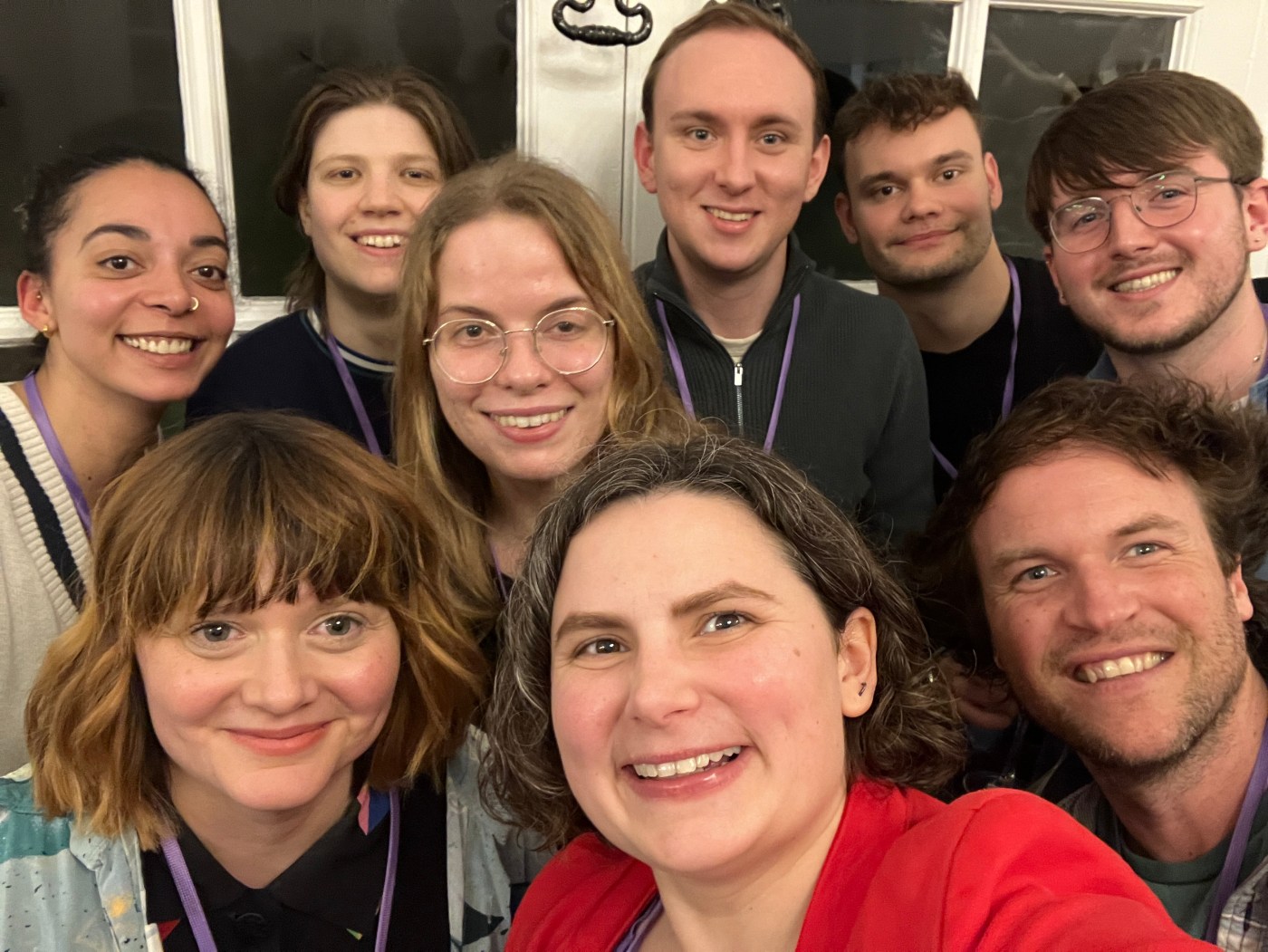
Welcome to my page on our research group at the University of Bristol. I moved to Bristol in Feb 2020 to start the Exoplanet Timeseries Characterisation (ExoTiC) team researching the atmospheres of exoplanets from observations with Hubble and JWST.
ExoTiC Atmospheres Team
 Hannah Wakeford
Dr Hannah Wakeford leads the ExoTiC team at the University of Bristol in the School of Physics Astrophysics theme. Hannah is an expert in atmospheric characterization of transiting exoplanets and science communication. Her work primarily uses spectroscopic time series observations of the planets during transit and eclipse to measure the composition and structure of their atmospheres. You can find her analysis pipelines on GitHub, and other scientific data in the tab above. Dr Wakeford is a member of a number of research collaborations and serves as an ESA representative on the Hubble Space Telescope Users Committee (STUC). As a science communicator, Hannah is co-author of the popular science book Bang!! The Complete History of the Universe, is a co-host and producer of Exocast: The Exoplanet Podcast, and regularly gives talks and interviews for science events.
Below I list the members of my team from early career MScR, PhD, and Postdocs and Fellows, followed by previous group members, visiting researchers, and associates.
MSc Research students:
PhD students:
Liam Leonard (Sep 2025 – Sep 2029)
Liam Leonard is an EPSRC Aerosols CDT PhD student as part of cohort 7 and is joint between Physics and Chemistry with his second supervisor Jonathan Reid (Chemistry). Liam completed his undergraduate work at Oxford University working in Biology with applications to drug development. For Liam’s PhD work he will be developing methods to synthesise high temperature silica and silicate aerosols in the lab. He is doing a 3 month project with Imperial College London to measure the impact of Aeroplane Contrails on the Earths climate and he will be doing a lab placement at Stanford University, USA to test out his experimental set-up and acquire the first measurements of silicates as part of his PhD work.
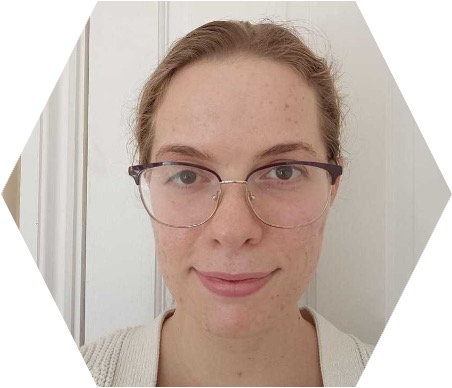
Ailsa Campbell (Sep 2024 – Mar 2028)
Ailsa Campbell is a University funded PhD student at the University of Bristol working with Dr Wakeford on exoplanet characterisation in the UV. Ailsa’s first project is part of the HUSTLE collaboration using the Hubble Space Telescope to measure the transmission spectrum of the warm Neptune HAT-P-26b from 200-800nm to measure its aerosol properties (Campbell et al. in prep). Ailsa is now working with her second supervisor, Dr Katy Chubb, on modelling the effect of polarised light in warm Neptunes. Ailsa previously obtained her MSci from Aberystwyth University in Wales, UK with a dissertation on simulating the detectability of transiting exoplanets with Gaia data.
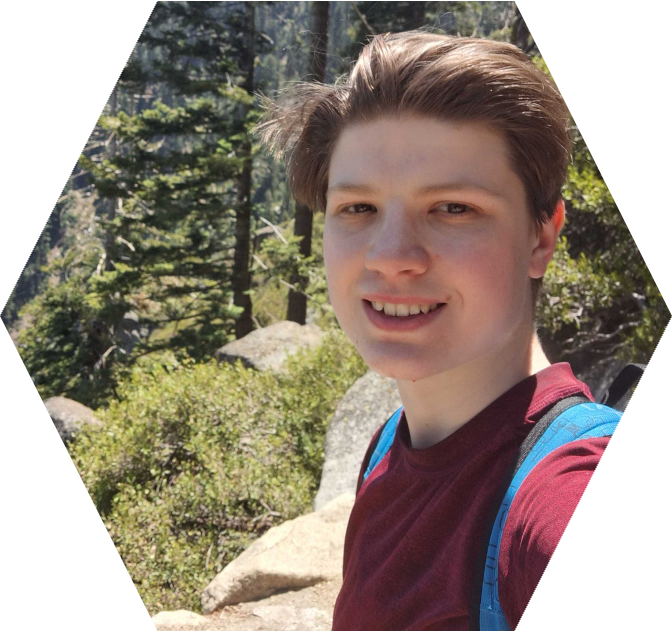 Charlotte Fairman (Sep 2023 – Mar 2027)
Charlotte Fairman is a University funded PhD student at the University of Bristol working with Dr Wakeford on theoretical interpretation of exoplanet atmosphere with retrieval modelling and the use of GCMs as a predictive tool for observational properties. Charlotte is also well versed in JWST NIRSpec data extraction and reduction for time series measurements as well as retrieval modelling to interpret planetary spectra; you can find her work on this as part of the BOWIE-ALIGN team on the planet NGTS-2b in Fairman et al. (2025). Charlotte previously completed a MSc by Research with Hannah at Bristol using retrievals to demonstrate the information content provided by optical wavelengths for exoplanet transmission spectra which can be found in Fairman, Wakeford & MacDonald (2024). Charlotte previously completed a BSc in Physics at the University of Bristol.
You can find Charlotte’s publications on ADS and information on the Bristol website.
Postdoctoral Researchers:
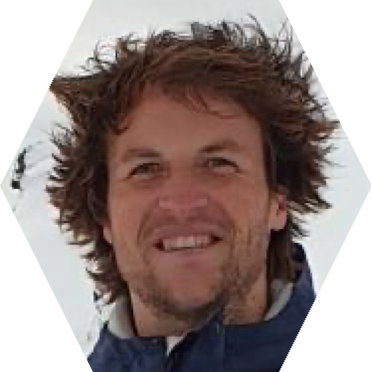 Dr Matt Lodge (Jan 2026 – Oct 2026)
Dr Matt Lodge is an expert in modelling the effects of fractal aggregate aerosol particles with applications applied directly to exoplanet atmospheres and the development of the Virga v2.0 cloud code. Matt completed his PhD in Physics at the University of Bristol in 2026 and is continuing his work in developing fast and easy ways for the community to incorporate the effects of fractals in their modelling. You can find Matt’s publications on ADS and information on his website: https://www.star.bris.ac.uk/matt_lodge/home.html
 Dr Cathal Maguire (Jan 2025 – Jan 2028)
Dr Cathal Maguire is an expert in high-resolution observations of exoplanet atmospheres using ground-based instrumentation and limb-asymmetry measurements at low resolution with JWST. Cathal is funded as part of the ERC Starting Grant to map the 3D properties of exoplanets with a specific application of the Harmonica transmission strings code. Cathal completed a PhD at Trinity College Dublin working on high resolution characterisation of ultra hot Jupiters. You can find out more on Cathal and his research on his website: https://cathal-maguire.github.io/
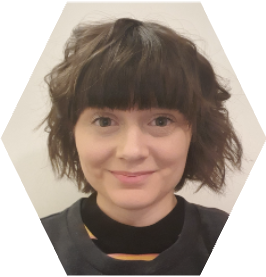 Dr Katy Chubb (Jan 2024 – June 2028)
Dr Katy Chubb is working with Dr Wakeford funded under the ERC Starting Grant (UKRI funded) to develop sophisticated modelling techniques to assess the aerosol properties of transiting exoplanets from mid-IR observations. Katy is co-supervising Ailsa Campbell’s PhD with Dr Wakeford where they will be using models to assess the UV spectra of exoplanets for present and future missions.
Associated Independent Fellows:
Royal Society Career Development Fellow
Dr Larissa Palethorpe (Jan 2026 – Dec 2030)
Dr Larissa Palethorpe is an expert in exoplanet discovery and classification of small exoplanets through Radial Velocities and Transits. Larissa is a member of the HARPS team and has experience working with a wide range of telescopes including TESS and CHEOPS. As a fellow at Bristol she will be working on refining the properties of the known radius valley – a dearth of planets around 1.7-1.8 Earth radii, as well as applying her work to the Rocky Worlds DDT program data and Cosmic Shoreline project as CHEOPS support.
Former Group Members:
PhD Students
 Daniel Valentine (Jan 2023 – July 2026)
Daniel Valentine was a School of Physics and STFC funded postgraduate student at the University of Bristol working with Dr Wakeford to analyze and map the emission spectra of exoplanets using JWST with a focus on WASP-17b (Valentine et al. 2024; Valentine et al. in prep). Daniel was a Visiting Archive Researcher at ESA ESTEC from Oct – Dec 2024 working on modelling eclipse mapping for the Ariel Mission (Valentine et al. 2025). Daniel previously completed his MSci with the University of Leeds. Daniel’s first paper on the eclipse map of the hot Jupiter WASP-17b based on JWST MIRI data can be found on ADS and additional information on his website: https://danvalent1ne.github.io
Dan is now a postdoctoral researcher at the Max Planck Institute for Astrophysics in Heidelberg, Germany.
Matt Lodge (Jan 2022 – Jan 2026, postdoc: Jan – Oct 2026)
Matt Lodge was a School of Physics postgraduate student at the University of Bristol working with Dr Wakeford and Dr Leinhardt to develop theoretical models to evaluate the impact that realistic fractal particles, compared to spherical, will have on their scattering and absorption properties. Matt previously completed his undergraduate work at the University of Exeter in 2011 before moving on to complete a PGCE in Physics Education and was a secondary school teacher at Blundell’s School in Tiverton UK before starting his PhD at Bristol in 2022.
You can find Matt’s publications on ADS and information on his website: https://www.star.bris.ac.uk/matt_lodge/home.html
Dr Matt Lodge is now a postdoc working in my group continuing his work on fractal aggregates.
 Lili Alderson (Sep 2020 – Mar 2024, postdoc: Apr – Jun 2024)
Lili Alderson was a School of Physics and STFC funded postgraduate student at the University of Bristol working with Dr Wakeford to analyze the transmission spectra of exoplanets using Hubble and JWST. Lili is part of multiple successful observing programs on JWST and recently led the Transiting Exoplanet Community ERS programs observations of WASP-39b with the NIRSpec G395H publishing the teams work in Nature. Lili has also published work from Hubble observations with an analysis of data from the Hubble and Spitzer Space Telescopes on the hot Jupiter WASP-17b. Lili has also been working as part of the JWST COMPASS team and has published work on TOI 836b with others in the works. Lili previously completed her MSci with the University of Southampton with a research year spent at the Center for Astrophysics, Harvard | Smithsonian.
Dr Lili Alderson is now a Klarman Fellow at Cornell University in the USA where she works on Neptune atmospheres.
You can find Lili’s publications on ADS and information on her personal website lili-alderson.com
Postdoctoral Researchers
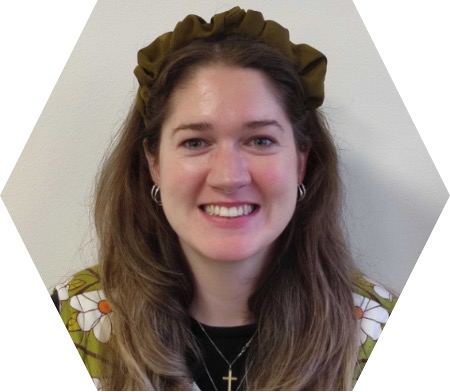 Dr Hattie Stewart (Aug 2024 – July 2025)
Dr Hattie Stewart is an expert in machine learning applied to astronomical data. Hattie completed her PhD at the University of Bristol in the Astrophysics Theme applying image processing techniques to large Radio astronomy datasets. Hattie is currently working with Dr Wakeford’s group to apply machine learning techniques to JWST spectroscopic image data to better assess and remove noise sources that impact the measured spectra. ADS link to publications Website: https://hstewart93.github.io
Hattie is now an AI Schmit Fellow at Oxford University.
 David Grant (Sep 2021 – Aug 2024)
Dr David Grant started as a STFC funded postdoctoral researcher and was then funded under Dr Wakeford’s ERC Starting Grant (Funded by the UKRI) at the University of Bristol. David has published his work on Transmission Strings a new technique to map the transmitting limb of exoplanet atmospheres and is working on a number of follow-up studies. David’s focus was on JWST MIRI LRS observations of transiting exoplanets and he was the lead author of the discovery of quartz clouds in the atmosphere of WASP-17b as part of JWST GTO program TST-DREAMS. David has also worked as part of the JWST Transiting Exoplanet Community ERS team publishing a method to measure CO fundamental bands in transiting planets, and has developed a number of open-source codes for exoplanet studies. You can find David’s publications on ADS and information on his personal GitHub.
David is now working in the Energy Storage industry at a start-up company in London, UK.
Long Term Research Visitors:
Visiting Research Students Abby Boehm (Sep 2025)
Victoria (Abby) Boehm is a PhD student at Cornell University working with Professor Nikole Lewis on Hubble and JWST spectra. Abby was visiting the group for 1-month funded through Dr Wakeford’s Philip Leverhulme Prize and working with Dr Wakeford on the HUSTLE program to develop the HUSTLE-tools open-source package, and working on the transmission spectra of WASP-17b, WASP-31b, and WASP-189b.
 Visiting Associate Professor Nikole Lewis (Jan – June 2023)
Associate Professor Nikole Lewis is visiting for a six-month sabbatical from Cornell University in the USA where she leads a group investigating the atmospheres of exoplanets and brown dwarfs. Nikole is visiting the University of Bristol to work with Dr Wakeford and her team on JWST observations as part of Professor Lewis’ GTO program to measure the atmosphere of a hot Jupiter.
 Visiting Research Student Michael Radical (Feb – April 2023)
Michael Radica was a PhD student at the University of Montreal, Canada working on observational analysis of exoplanet atmospheres. Michael visited the University of Bristol to work with Dr Wakeford on observations he is leading using the Hubble Space Telescopes WFC3-UVIS instrument. Michael was a postdoctoral fellow at the University of Chicago following his PhD and is now a tenure-track faculty member of the Astrophysics Department at the University of Texas: Austin.
Short Term Research Visitors:
- Dr Elspeth Lee (March 2026)
- Dr Ryan MacDonald & Sten Vermilion (Feb 2026)
- Dr Shang-Min (Shami) Tsai (Sep 2025)
Previous Associates with ExoTiC
Iva Laginja
Dr Iva Laginja is an astrophysics researcher at LESIA, Paris, France. Iva was a Research Instrument Analyst at Space Telescope Science Institute (STScI) before obtaining a PhD in instrumentation from the University of Merseille, France. While at STScI, Iva worked with Dr Wakeford on development of the ExoTiC-ISM python package to analyse time series observations from the Hubble Space Telescope. You can find the ExoTiC-ISM package and associated work on GitHub.
The University of Bristol has a vibrant and diverse Astrophysics Group. In exoplanet studies Dr Zoë Leinhardt and her team using numerical simulations to model early planet collisions and formation including the effects on atmospheres. Dr Denis Sergeev uses complex 3D General Circulation models to assess the dynamics and radiation environment of exoplanet atmospheres. You can find more about their work on the Bristol Astrophysics webpages.

